We Asked ChatGPT and Gemini 500 Buyer Questions. Their Own Top-10 Brands Were Missing Most of the Time
M. Zeeshan, Founder of GEOREX AI
Generative Engine & AI Search Intelligence
Share:
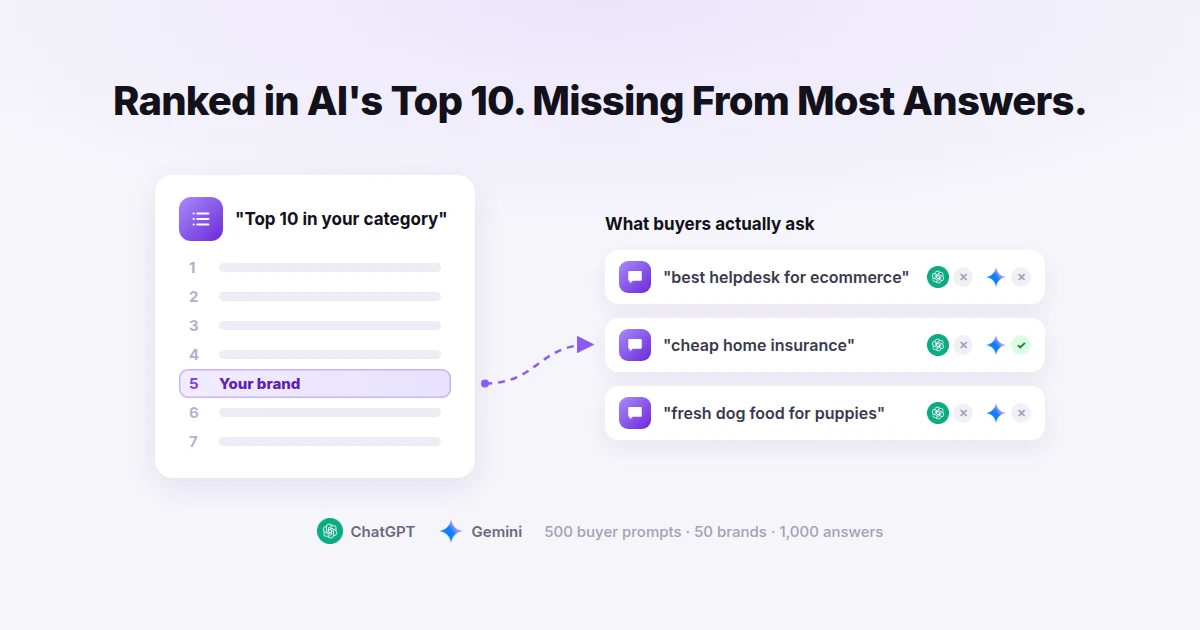
"Being on an AI engine's "top 10" list does not mean it recommends you when a buyer asks a real question. We asked the real ChatGPT and Gemini apps 500 buyer prompts about 50 brands they themselves rank around #4 to #7: ChatGPT named the brand in 31% of answers and Gemini in 37%."
Key takeaways
We asked the real ChatGPT and Gemini apps 500 buyer prompts about 50 brands that both apps rank around #4 to #7 in their own "top 10" lists. That is 1,000 answers.
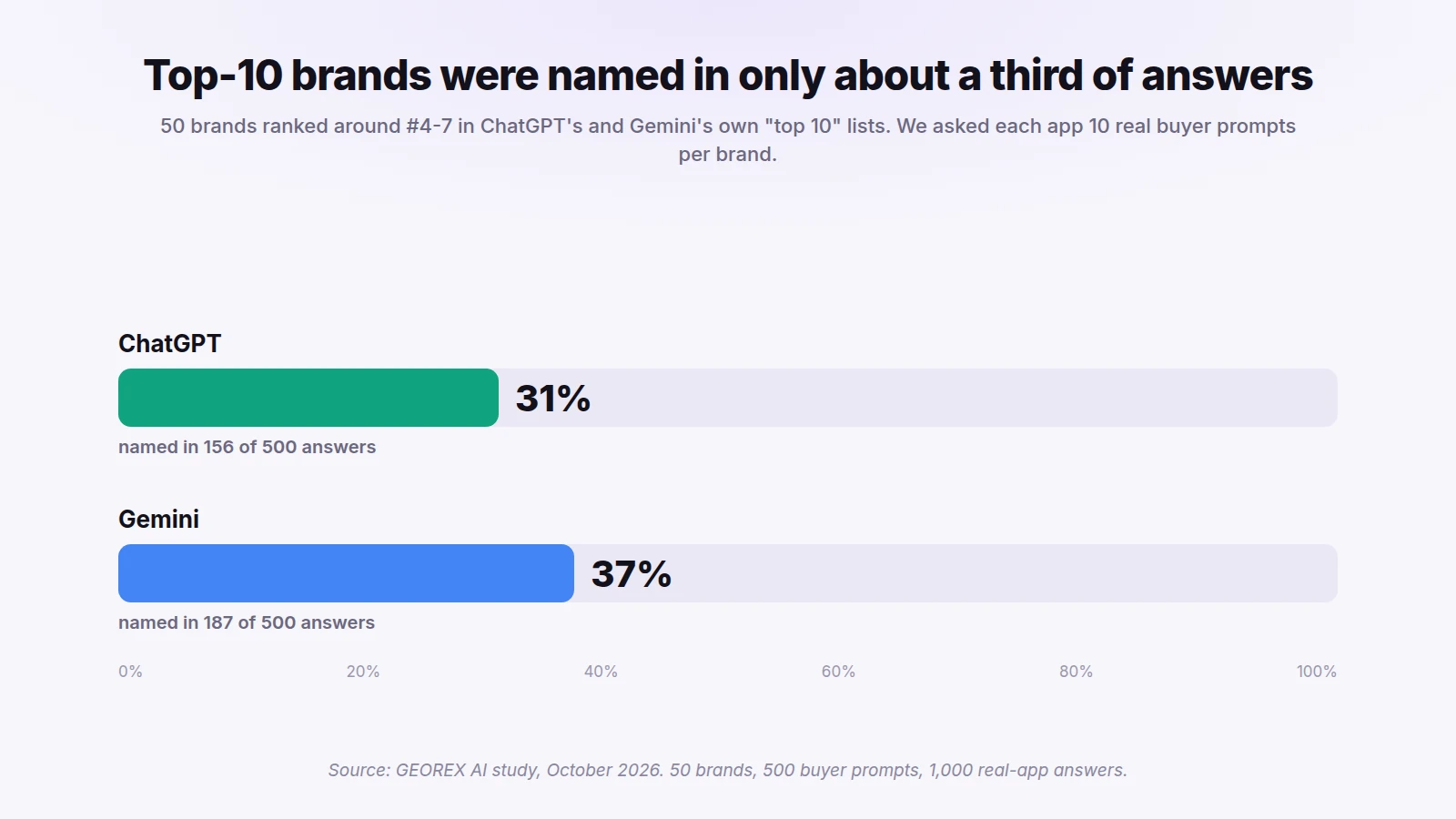
ChatGPT named the brand in 31% of its answers (156 of 500). Gemini named it in 37% (187 of 500).
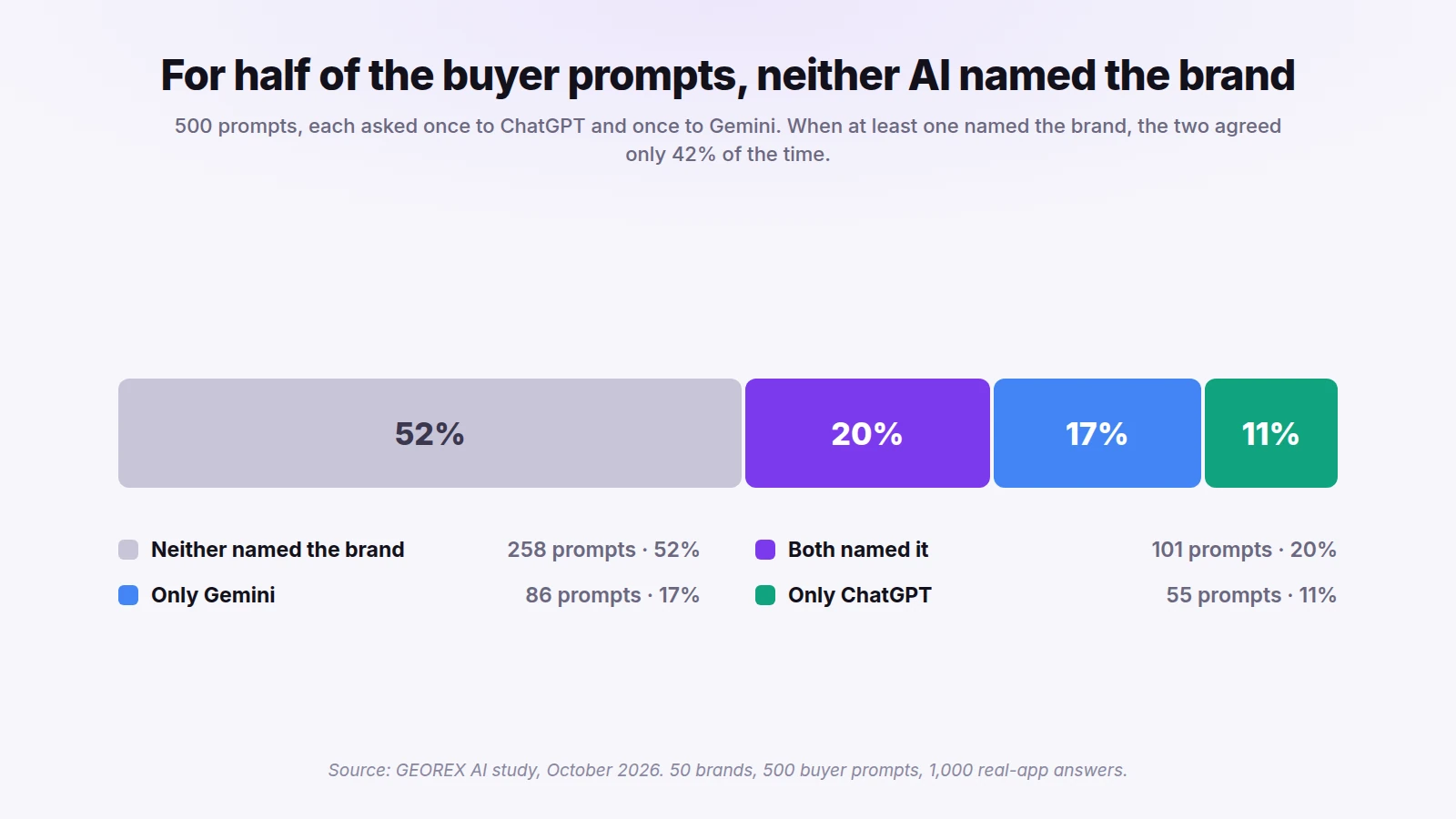
For 52% of the prompts, neither app named the brand. When at least one did, the two apps agreed only 42% of the time.
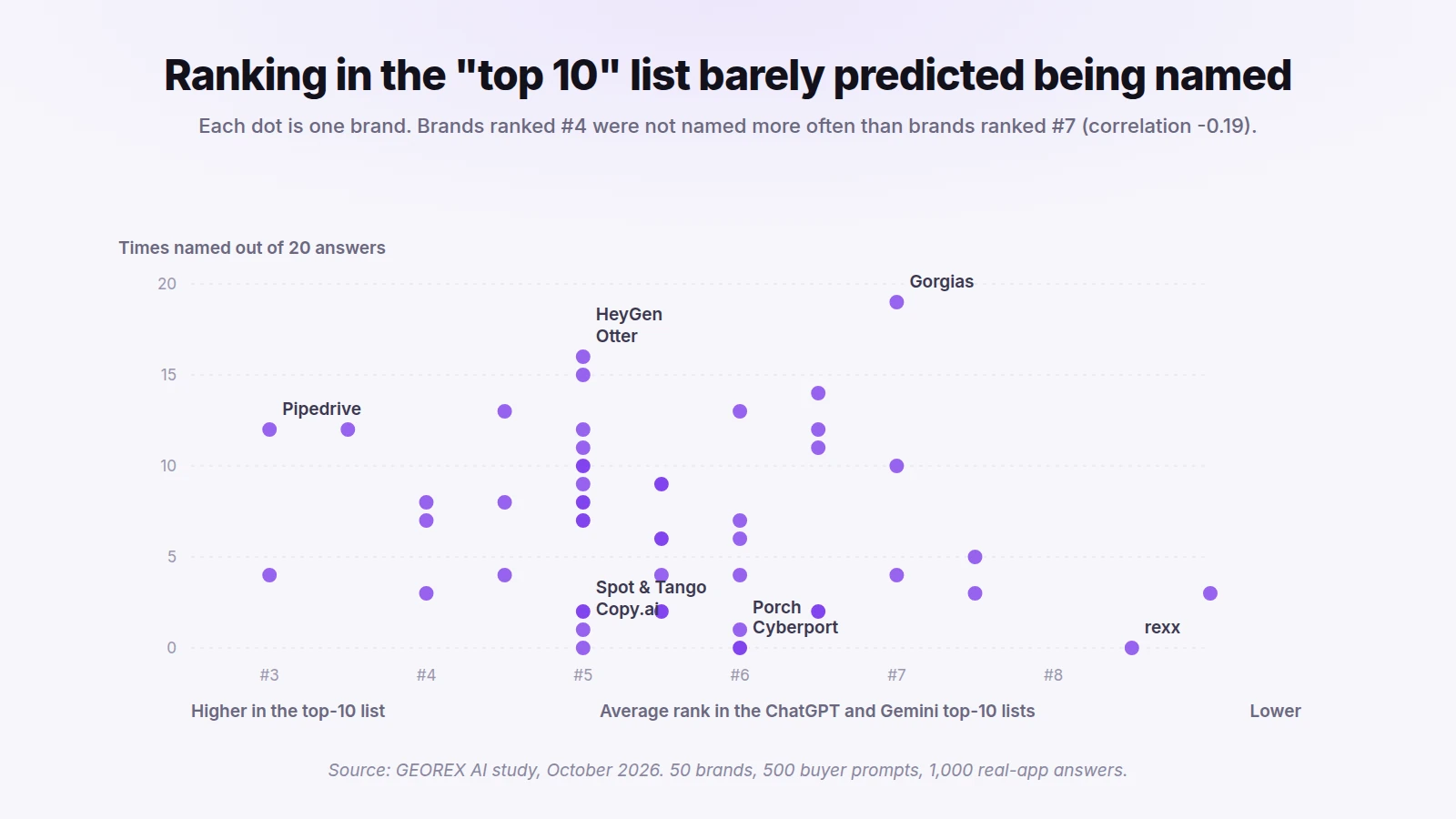
A brand's place in the "top 10" list barely predicted how often it was named for real buyer questions (correlation -0.19).
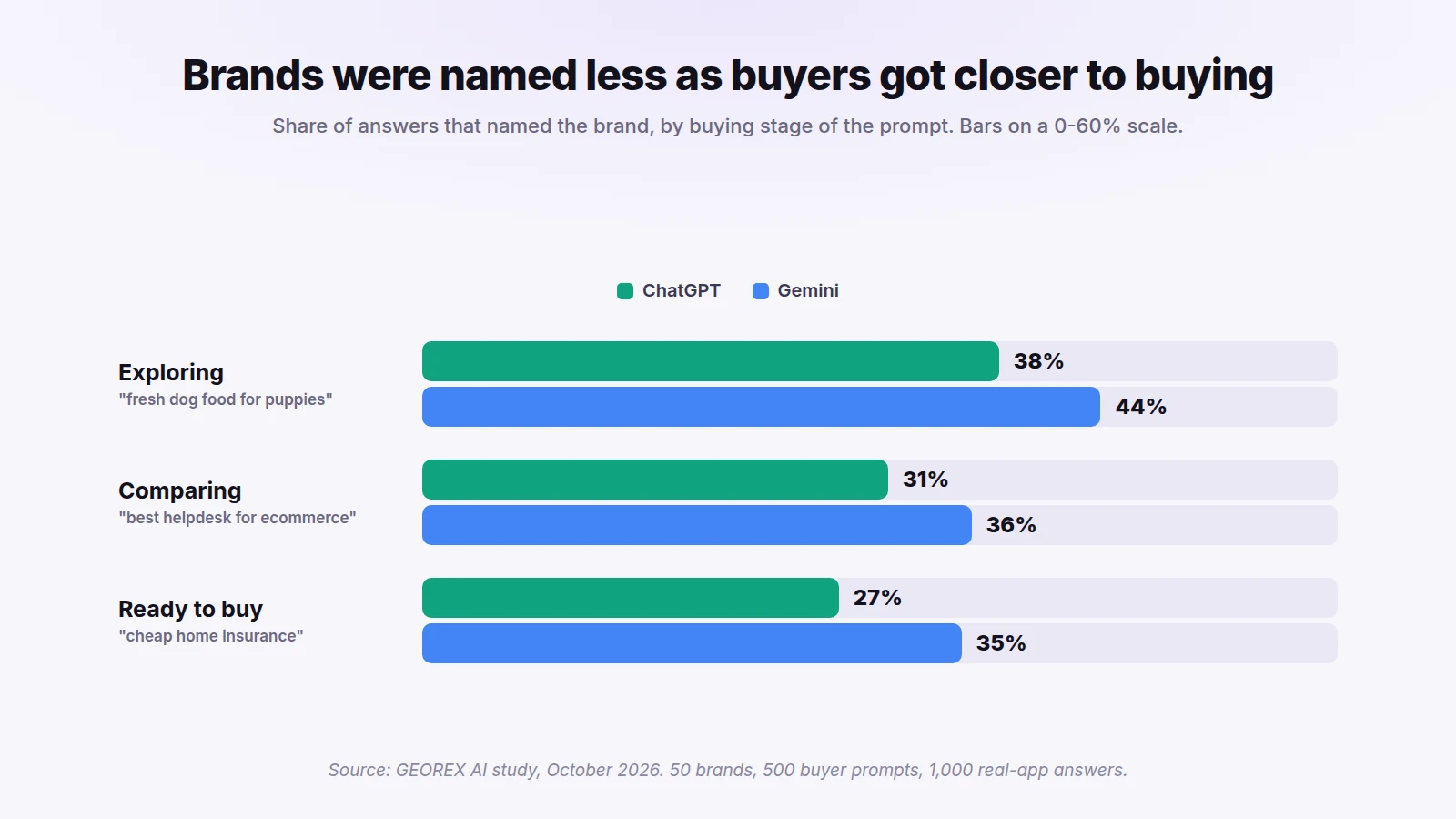
Brands were named less often as prompts moved closer to a purchase, and less often in Europe than in the US.
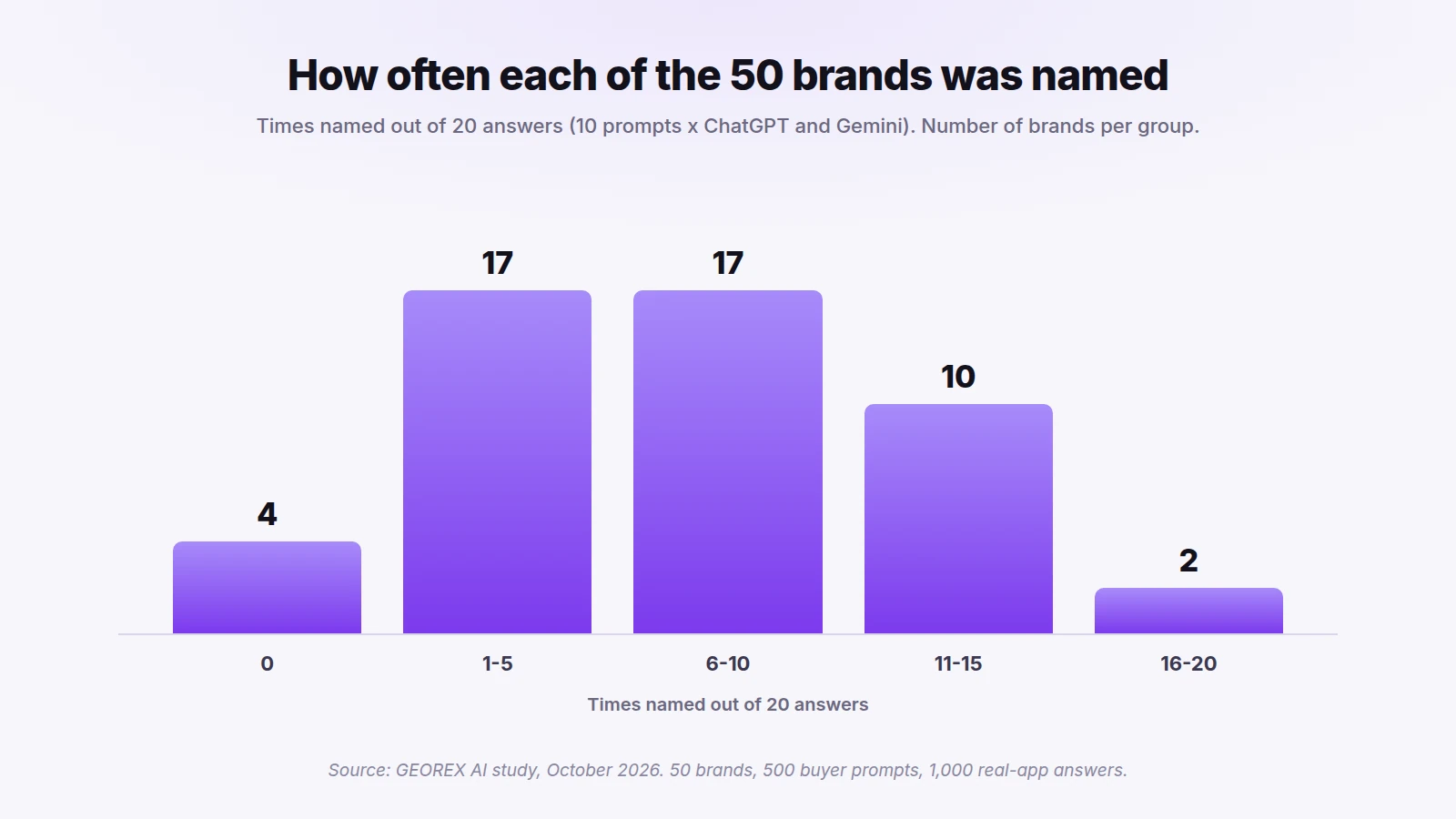
Four brands were never named in 20 answers. Two of them describe themselves on their own website in different words than the AI uses for them.
Being on an AI engine's "top 10" list does not mean the engine recommends you when a buyer asks a real question. In our test, the brands that ChatGPT and Gemini themselves rank in the middle of their top-10 lists were left out of about two out of three answers to their own buyers' questions.
This study shows what we found, how we ran it, where its limits are, and what it means for any brand that wants to be named in AI answers.
How we ran the study
M. Zeeshan, Founder of GEOREX AI
Author
Founder of GEOREX AI, an AI visibility platform that tracks how brands actually appear across ChatGPT, Claude, Perplexity, and Gemini, and turns the gaps it finds into a prioritized action plan.
Free AI visibility audit
See how AI engines describe your brand today
Check ChatGPT, Gemini and Google AI Overviews in minutes. No credit card needed.
We kept the method simple so anyone can repeat it. Every number in this article comes from 1,000 answers collected on 3 and 4 October 2026.
Pick 50 categories: 35 categories for the US and 15 for Europe (UK, Germany, France, the Netherlands, Spain and Sweden), weighted toward categories with high buying demand, such as AI tools, software, finance and online retail.
Ask both apps for their top 10: For each category we asked ChatGPT and Gemini: "What are the top 10 [category] in [country]? List only the names, best first."
Pick a mid-ranked brand: From each pair of lists we picked a brand that appeared in both, ranked around #4 to #7. These are well-known brands, but not the category leader. Two picks were replaced: hulu.com now presents the brand as part of Disney+, so we used Paramount+, and one site's content could not be read, so we used Douglas Elliman.
Write the buyer prompts: For each brand, the GEOREX AI prompt engine read the brand's own website and wrote 50 prompts the way buyers type them: short searches such as "best helpdesk for ecommerce" and plain questions such as "which fresh dog foods are healthiest?". European brands got prompts in their local language.
Ask the real apps: We sent 10 of each brand's prompts, spread across the buying stages, to the real ChatGPT and Gemini apps (not the API), with the country set to the brand's market. Each prompt was asked once per app.
Count the brand: An answer counts as naming the brand when the brand's name or website appears anywhere in it.
Ten prompts per brand is a small sample for any single brand. Across 50 brands and two apps, it gives 1,000 answers, which is enough to see clear patterns.
Finding 1: top-10 brands were named in only about a third of answers
Share of answers that named the brand, across 50 brands and 500 buyer prompts. Source: GEOREX AI study, October 2026
Every brand in the study had already been put on its category's top-10 list by both apps. Yet when we asked the questions a real buyer types, ChatGPT named the brand in 31% of its answers and Gemini in 37%.
The gap comes from what a buyer actually asks. A "top 10" question asks for a list of the whole category. A buyer asks something narrower: "fresh dog food for puppies", "best helpdesk for ecommerce", "cheap home insurance". Each narrow question gets its own short list, and a brand that is safely inside the top 10 for the category often falls outside the top three or five for the specific need.
Gemini named brands slightly more often than ChatGPT. One reason we saw in the answers: Gemini often shows shopping cards with product names and prices, while ChatGPT more often leans on review roundups and names fewer products.
Finding 2: for half of the prompts, neither app named the brand
Each prompt was asked once to ChatGPT and once to Gemini. Source: GEOREX AI study, October 2026
We looked at each prompt with both answers side by side:
Result for the same prompt
Prompts
Share
Neither app named the brand
258
52%
Both apps named the brand
101
20%
Only Gemini named it
86
17%
Only ChatGPT named it
55
11%
When at least one app named the brand, the two apps agreed only 42% of the time (101 of 242 prompts). So checking one AI engine tells you little about the other. A brand that tracks only ChatGPT would have missed 86 prompts where Gemini named it, and the other way round for 55 prompts.
Finding 3: a higher place in the top-10 list barely helped
Correlation between average top-10 rank and times named: -0.19. Source: GEOREX AI study, October 2026
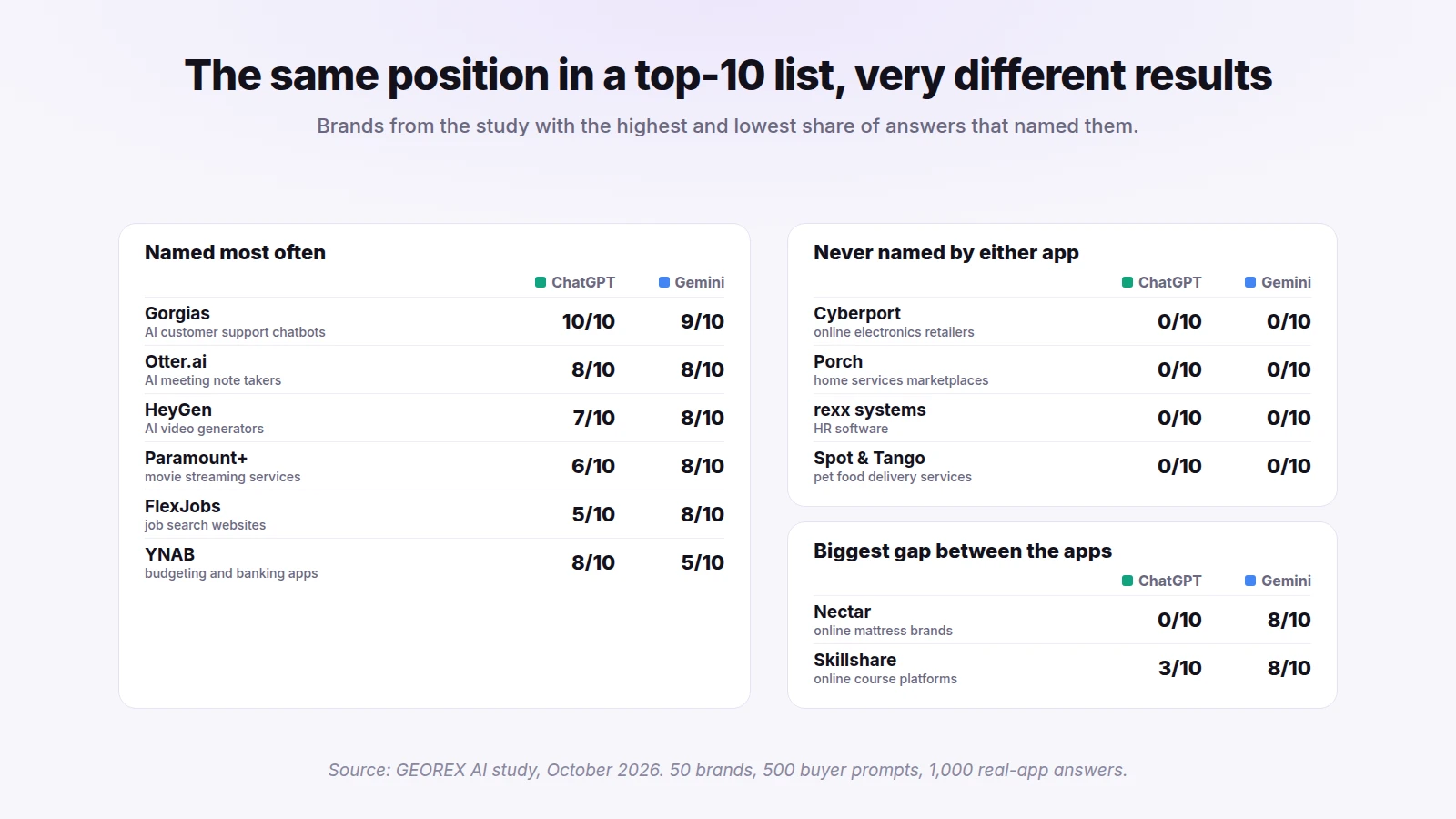
If the top-10 list were a good guide, brands ranked #4 would be named much more often than brands ranked #7. They were not. Gorgias, ranked #7 in both lists for AI customer-support chatbots, was named in 19 of 20 answers, more than any other brand in the study. Spot & Tango, ranked #5 in both lists for pet food delivery, was named in none.
Times named out of 20 answers (10 prompts on ChatGPT and Gemini). Source: GEOREX AI study, October 2026
Most brands sat in the middle: 34 of 50 were named in 1 to 10 of their 20 answers. Only 12 brands were named in more than half of their answers.
This is the main lesson of the study. A ranking question ("top 10 X") measures whether the AI knows your brand. It does not measure whether the AI recommends you for the questions that bring buyers. Those are different numbers, and only the second one turns into customers. We explain the difference between the two kinds of numbers in how to measure AI visibility.
Finding 4: brands were named less as buyers got closer to buying
Share of answers that named the brand, by buying stage of the prompt. Source: GEOREX AI study, October 2026
We sorted every prompt into three buying stages:
Buying stage
Example prompt
ChatGPT
Gemini
Exploring
"fresh dog food for puppies"
38%
44%
Comparing
"best helpdesk for ecommerce"
31%
36%
Ready to buy
"cheap home insurance"
27%
35%
The prompts closest to a purchase named the brand least often. In the answers, ready-to-buy prompts such as "cheap ..." or "... delivery" often led to price lists, store brands, shopping cards or a short "it depends on your location" reply instead of a list of named companies. These are the prompts that matter most for sales, which makes them the ones most worth tracking.
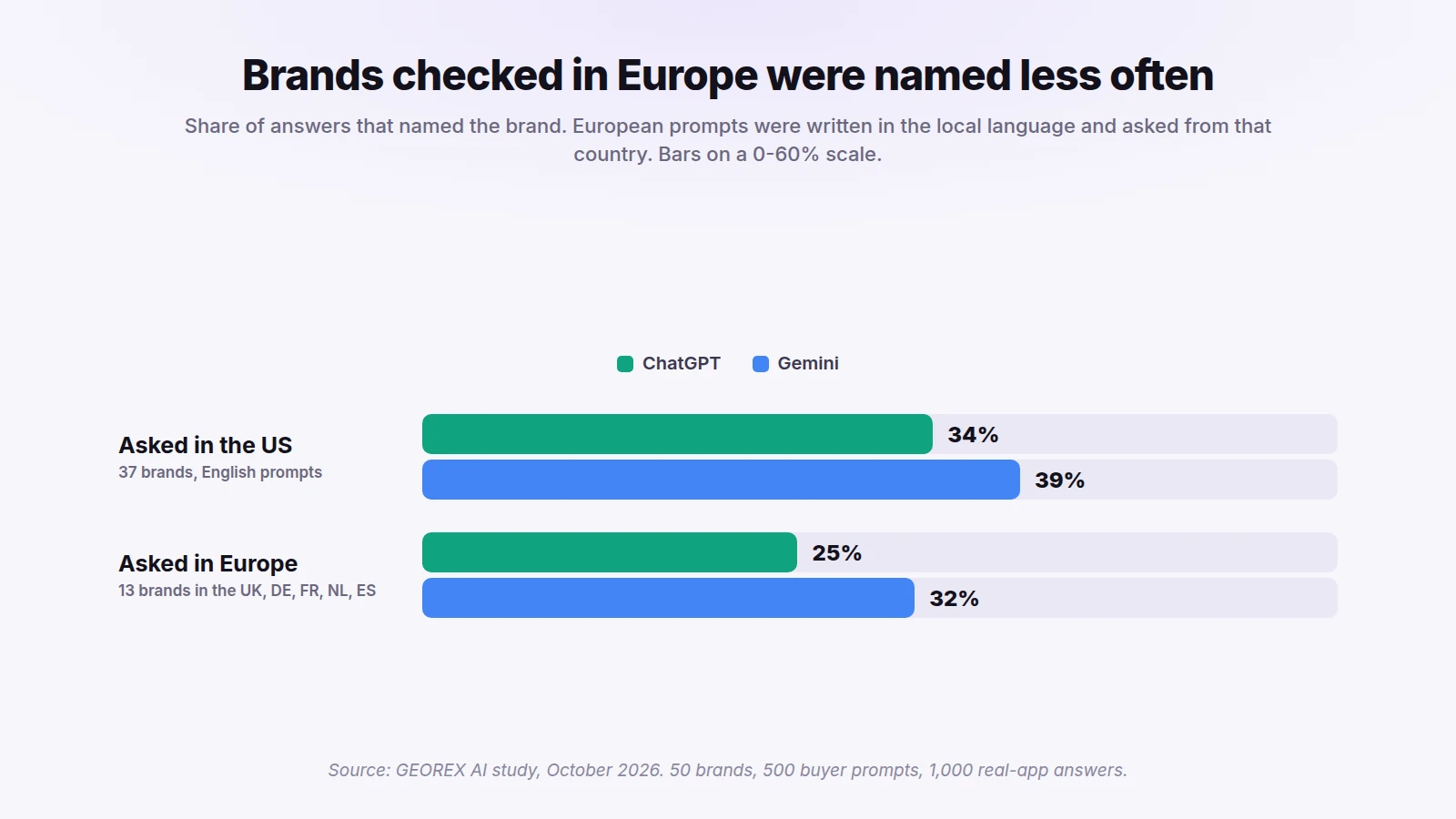
Finding 5: brands checked in Europe were named less often
European prompts were written in the local language and asked from that country. Source: GEOREX AI study, October 2026
For the 13 brands we checked from inside Europe, ChatGPT named the brand in 25% of answers and Gemini in 32%, against 34% and 39% for brands checked in the US. With 13 brands, this is a smaller sample, so treat it as a direction rather than a precise gap. A brand that sells in several countries should check each market in its own language. Results in one country do not carry over to another.
What separated the most-named brands from the never-named ones
Times named out of 10 answers per app. Source: GEOREX AI study, October 2026
The brands that were named most often had one thing in common: buyers' questions and the brand's own focus lined up. Gorgias describes itself as an ecommerce helpdesk, and buyers ask "best helpdesk for ecommerce" and "best Shopify customer support apps". Both apps named Gorgias for almost every one of those prompts, often first.
The brands that were never named show three different problems:
The website and the AI describe the brand differently: Porch's website presents it as a home insurance company, so its buyer prompts were about home insurance. In those answers, the apps named insurers such as State Farm and Amica, not Porch. Yet in the "top 10" lists, the same apps had placed Porch among home-services marketplaces. Copy.ai shows the same pattern: its site now calls it go-to-market software, while both apps list it as an AI writing tool. When the two descriptions do not match, the brand falls between two categories and is named in neither.
The buyer asks for products, not stores: German buyer prompts for Cyberport, an electronics retailer, were mostly about products ("Beste laptops", "Top laptops für studenten"). The answers listed laptop models, not shops, so no retailer was named.
One rival owns the category: For Spot & Tango, the fresh dog food answers were led by The Farmer's Dog and Ollie. A brand ranked #5 in the category can still be missing from almost every answer when two rivals dominate it.
The biggest gap between the two apps came from Nectar, the mattress brand: Gemini named it in 8 of 10 answers, ChatGPT in none. Gemini's answers often showed shopping cards that included Nectar mattresses, while ChatGPT based its picks on review sites that favored other brands. The same brand can do well in one AI app and be absent in another for reasons that have nothing to do with the brand itself.
What this means for your brand
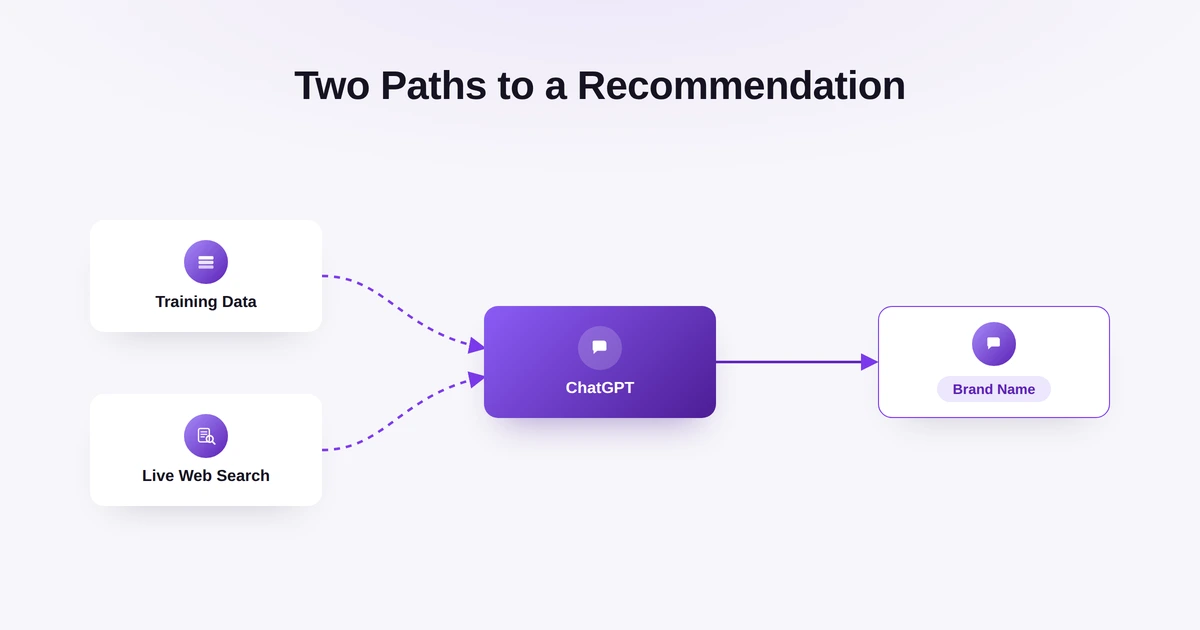
Track real buyer prompts, not "top 10" questions: A ranking question tells you the AI knows your name. Only the questions buyers actually type show whether it recommends you. Our guide on how ChatGPT decides which brands to recommend explains where those picks come from.
Check each AI app on its own: ChatGPT and Gemini agreed less than half the time. A single combined score hides where you are strong and where you are missing.
Make your website describe you the way buyers describe you: If buyers and AI apps call your product an "AI writing tool", a homepage that only says "go-to-market platform" makes it harder for any AI to place you in the right list.
Give extra attention to ready-to-buy prompts: These were named least often and are closest to revenue. Clear pricing pages, product data and up-to-date listings help AI apps answer them with your brand in the list. Our technical GEO checklist covers the basics.
Check every market in its own language: Being named in the US does not mean being named in Germany or France.
Measure more than once: AI answers change from run to run. One check is a snapshot; a fixed prompt set checked on a schedule shows the trend.
One answer per prompt per app: AI apps can give a different answer when the same prompt is asked again, so any single brand's score could move by a few points on a second run. The overall patterns across 1,000 answers are far more stable than any one brand's number.
Ten prompts per brand: That is enough to compare groups of brands, not to judge one brand precisely.
No personal history: Answers for a signed-in user with chat history or memory turned on may differ.
Name matching: We counted a brand when its name or website appeared in the answer. A misspelled name would be missed, and a brand mentioned in a negative way still counts as named.
The brands came from the AI apps' own lists: That was deliberate: we wanted brands the apps already know.
A snapshot from October 2026: AI apps change often. The results describe that week, not a permanent ranking.
How to run the same check for your brand
You can repeat this study by hand: write 10 to 20 questions your buyers really ask, ask them in ChatGPT and Gemini on a fixed day each month, and record in a sheet whether your brand is named. GEOREX AI does the same automatically. It writes the buyer prompts from your website, checks them on a schedule in the AI apps your plan covers (ChatGPT, Gemini, Google AI Overviews, Perplexity and Claude), and shows which competitors are named when you are not.
Not necessarily. In this study, brands that ChatGPT and Gemini placed around #4 to #7 in their own top-10 lists were named in only 31% (ChatGPT) and 37% (Gemini) of answers to real buyer prompts. A top-10 list shows that the AI knows your brand; buyer prompts show whether it recommends you.
Data and method
50 brands in 50 categories (35 US, 15 Europe), picked from ChatGPT and Gemini "top 10" answers collected on 3 October 2026.
50 buyer prompts written per brand from the brand's own website; 10 per brand asked to each app.
Answers collected from the real ChatGPT and Gemini apps through Bright Data on 3 and 4 October 2026, with the brand's country set.
1,000 answers in total; a brand counts as named when its name or website appears in the answer.
AI Visibility
How to Get Your Content Cited in Google AI Overviews
What makes a page eligible for Google AI Overviews and AI Mode, how query fan-out picks sources, which snippet controls matter, and how to measure citations and clicks.